Tankless vs. Tank Water Heaters: Which Is Better in 2026?

April 24, 2026

Share this article

Choosing between tankless vs. tank water heaters involves weighing immediate costs against long-term energy savings and hot water availability. Tankless systems heat water on demand for an endless supply, while traditional tanks maintain a pre-heated reservoir. The best choice for your home depends on your family size and local climate conditions.

How do tankless and tank water heaters work?

Understanding the fundamental mechanics of these two systems is the first step in making an informed decision for your home. A traditional tank water heater works by keeping a large volume of water—typically 40 to 60 gallons—at a consistent temperature 24 hours a day. This reservoir is stored in a heavy, insulated cylinder. When you turn on a hot water tap, the heated water is drawn from the top of the tank, and cold water enters the bottom to be heated by a gas burner or electric element. This process is simple but leads to "standby heat loss," where energy is used to keep the water hot even when nobody is using it.

In contrast, a tankless water heater, often called an "on-demand" system, does not use a storage tank. Instead, it utilizes high-powered burners or electric coils to heat water rapidly as it flows through a heat exchanger. When you open a hot water faucet, a flow sensor activates the unit. Cold water travels through a series of coils where it is instantly brought up to your desired temperature. This eliminates standby heat loss entirely, as the unit only consumes energy when water is actually flowing. You can learn more about these systems on our Tankless Water Heater page.

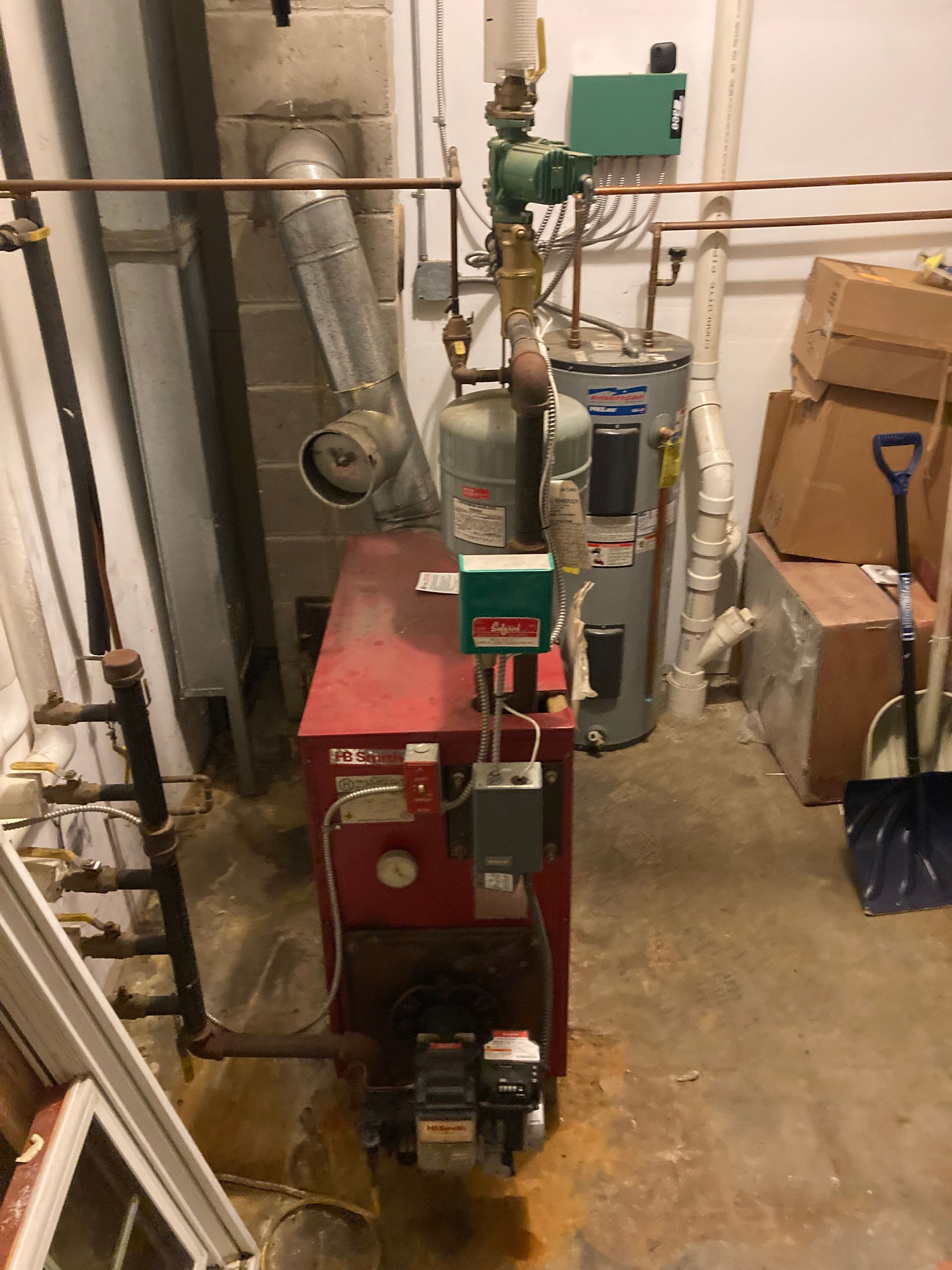
Modern Hot Water Usage

Why does cold ground water matter for tankless sizing in Maine?

For homeowners in Fryeburg, ME, and across Western Maine or Eastern New Hampshire, the temperature of the incoming ground water is a critical factor that is often overlooked. In our region, ground water temperatures can drop significantly during the winter months, often hovering just above freezing. This is significantly colder than ground water in southern states.

Plumbing professionals refer to this as "Delta T," or the temperature rise required. If your incoming water is 40°F and you want your shower at 110°F, the unit must provide a 70-degree temperature rise instantaneously.

  • Flow Rate Impact: As the required temperature rise increases, the maximum flow rate (gallons per minute) of a tankless unit decreases.
  • Sizing Requirements: A unit rated for 5 gallons per minute in Florida might only produce 2.5 gallons per minute during a Maine winter.
  • BTU Demand: Gas tankless units in cold climates often require higher BTU inputs to keep up with the demand.
  • Equipment Strain: Units that are undersized for cold climates will struggle, leading to lukewarm water during peak winter months.
  • Professional Assessment: It is vital to have Water Heater Services from experts who understand local climate demands.

Is a tankless water heater better for large families?

When you have a large household with back-to-back showers, multiple loads of laundry, and a dishwasher running simultaneously, the "endless hot water" promise of a tankless system is highly appealing. In a traditional tank system, once the 50 gallons of stored hot water are exhausted, the family must wait 20 to 40 minutes for the tank to recover. This often leads to the dreaded "cold shower surprise" for the last person in line.

A tankless system solves this problem by providing a continuous stream. However, "endless" does not mean "infinite capacity." While the hot water won't run out, the unit can only provide a certain amount of hot water at once. If three people shower at the exact same time in a cold Maine winter, an average-sized tankless unit might struggle to maintain the temperature across all fixtures. For very large families, we often recommend installing two units in parallel or a high-capacity commercial-grade residential model to ensure volume and temperature are both maintained.

Traditional Tank Systems: Pros and Cons

Traditional tank water heaters remain the most common choice for many homeowners due to their familiarity and lower initial barrier to entry. If your current system fails and you need an immediate Water Heater Replacement , a tank model is usually the fastest to install.

Pros of Tank Heaters:

  • Lower upfront purchase price and installation labor costs.
  • Simple mechanical design that is easy and inexpensive to repair.
  • Consistent performance regardless of incoming ground water temperature (though recovery takes time).
  • Lower venting requirements compared to high-efficiency tankless gas units.

Cons of Tank Heaters:

  • Limited supply of hot water that can run out during high demand.
  • Higher monthly energy bills due to constant standby heating.
  • Larger physical footprint, requiring significant floor space in a basement or utility closet.
  • Shorter lifespan, typically lasting only 8 to 12 years before the tank begins to corrode.

Tankless Water Heaters: Lifespan and Efficiency

The primary draw of tankless technology, beyond the convenience of endless water, is the impressive lifespan and energy efficiency. Most tankless units are designed with modular parts, meaning if a single component fails, it can often be replaced without discarding the entire machine. This leads to a functional lifespan of 20 years or more when properly maintained.

From an efficiency standpoint, tankless units are frequently rated with an Energy Factor (EF) of 0.90 or higher, whereas standard tanks often fall in the 0.60 to 0.70 range. This means more of the energy you pay for is actually going into the water rather than being wasted through the chimney or the tank walls. For environmentally conscious homeowners in the Fryeburg area, this reduced carbon footprint is a significant advantage. Additionally, the compact, wall-mounted design of tankless heaters frees up valuable floor space, which can be a game-changer in smaller homes or finished basements.

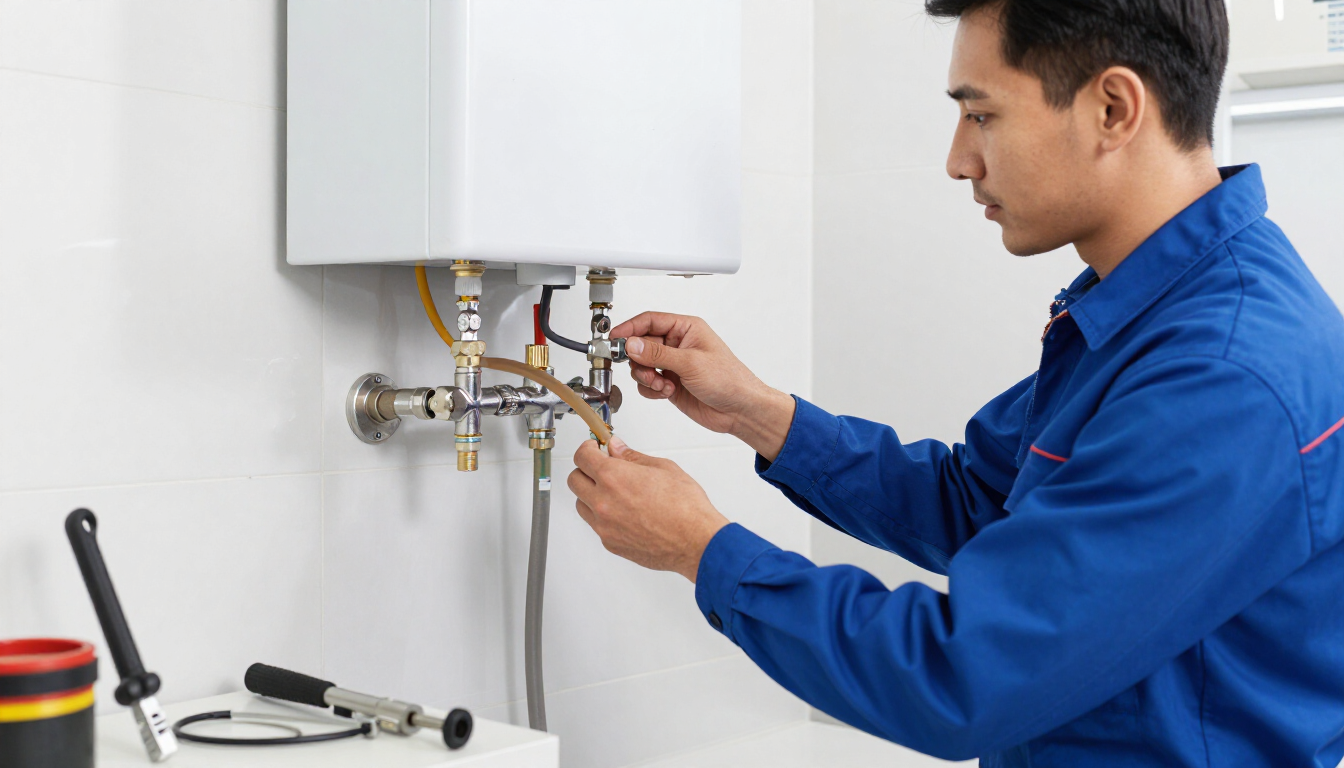
Plumbing Professional at Work

What are the cost differences between tank and tankless systems?

The financial comparison between these two systems involves looking at both the "sticker price" and the total cost of ownership over two decades. A traditional tank water heater installation is generally the more budget-friendly option in the short term. The units are less expensive, and the installation process is straightforward, especially if you are replacing an old tank with a similar model.

Tankless systems require a higher initial investment. The units themselves cost more, and the installation is more complex. Because tankless gas units have much higher BTU requirements, they often necessitate upgrading your gas lines to a larger diameter. Furthermore, they require specialized stainless steel venting that must be routed to the exterior of the home. However, many homeowners find that the lower monthly utility bills and the fact that the unit lasts twice as long as a tank heater make it the more economical choice over 20 years. If you are dealing with a leak and need help fast, our Emergency Plumbing Services can help you evaluate your options quickly.

Professional Installation Services in Fryeburg

At First Choice Plumbing and Heat Pump, we understand that every home in Fryeburg and the surrounding Sebago Lake region has unique needs. Whether you are leaning toward the high-tech efficiency of a tankless system or the reliable simplicity of a traditional tank, professional installation is non-negotiable. Poorly installed water heaters can lead to inefficient operation, shortened equipment life, and even safety hazards like carbon monoxide leaks or water damage.

Our team provides expert Water Heater Repair and installation services tailored to the Maine State Plumbing Code. We take the time to calculate your household's peak hot water demand and measure your incoming water temperature to ensure the system we install will perform perfectly even on the coldest January night. As a local business, we take pride in helping our neighbors find the most cost-effective and comfortable solutions for their homes.

Summary of Key Takeaways

When deciding between a tank and a tankless water heater, consider the following points to determine the best fit for your specific situation:

  • Household Size: Large families benefit from the endless supply of tankless, while 1-2 person households may find a tank more cost-effective.
  • Climate Matters: In Maine and NH, tankless units must be sized specifically to handle very cold incoming ground water.
  • Space Savings: Tankless units are wall-mounted and compact, whereas tanks require significant floor space.
  • Budget: Tanks offer lower upfront costs; tankless systems offer lower long-term operating costs and double the lifespan.
  • Maintenance: Both systems require maintenance, but tankless units need annual descaling to prevent mineral buildup from hard water.

Ultimately, the choice depends on your priorities regarding comfort, space, and long-term savings. If you are ready to upgrade your home's hot water system or simply have more questions, feel free to Contact Us for a free estimate and professional guidance tailored to your home.

Recent Posts

Professional plumber inspecting a well pump system in a utility room.
April 16, 2026
If your well pump stops working in Fryeburg, ME or Conway, NH, follow this emergency guide. Learn the signs of pump failure, troubleshooting tips, and when to call First Choice Plumbing for professional repair.
Mini split installation in a modern home
April 12, 2026
Wondering if a mini-split is worth it for your Maine or New Hampshire home? Explore energy savings, rebate options, and how ductless heat pumps handle brutal winters.
Snow melting against a Maine home foundation causing basement leaks
April 7, 2026
Learn why snow melt causes a basement leak in Maine. Our guide covers spring thaw flooding, hydrostatic pressure, sump pump failure, and repair tips.
Outdoor drain clearing during spring thaw
March 27, 2026
Facing soggy yards or basement leaks? Learn how to manage spring thaw drainage issues in Fryeburg, ME, with expert tips on prevention and professional solutions.
A bathroom with beige tiled walls, a white bathtub, a pedestal sink with a medicine cabinet mirror, and a window.
March 17, 2026
Learn what causes a water heater to stop producing hot water, common repair issues, and when replacement may be needed. First Choice Plumbing can help.
Blue boiler with copper pipes against a gray cinder block wall.
February 13, 2026
Discover why choosing a local Fryeburg plumbing and heat pump company means faster service, climate expertise, and personalized care for your home.